
Waking up with an aching lower back and a bloated belly, you might wonder whether the two are connected. The short answer: yes, IBS can cause back pain, or at least travel closely alongside it. Backache is one of the more common symptoms people with irritable bowel syndrome notice beyond the gut itself, and while it is usually harmless, it helps to understand why it happens and when it is worth getting checked.
Can IBS cause back pain? What the link looks like
IBS is a disorder of gut-brain interaction. The problem is not damage to the bowel but the way the gut, its nerves, and the brain communicate. Because so much of that conversation runs through shared nerve pathways, discomfort that starts in the digestive tract can be felt somewhere else entirely, including the lower and middle back.
Back pain is not part of the formal diagnostic criteria for IBS, but surveys consistently find that people with IBS report musculoskeletal aches, including backache, far more often than people without it. So if you have IBS and a nagging back, you are not imagining the pattern.
A few plausible mechanisms explain why the two travel together:
- Referred pain and shared nerves. The intestines and the lower back feed into overlapping nerve routes at the spinal cord. When the gut is stretched or irritated, the brain can misread the signal and register it as back pain.
- Bloating and gas pressure. A distended, gas-filled bowel physically pushes on surrounding structures and changes how you hold yourself. Many people unconsciously arch or brace against bloating, which strains the lower-back muscles.
- Visceral hypersensitivity. In IBS, the gut's pain threshold is turned down, so ordinary amounts of gas or stretching feel painful. That heightened sensitivity can spill over into how the whole trunk feels.
- Central sensitization. IBS often overlaps with conditions like fibromyalgia and chronic low-back pain, where the nervous system amplifies pain signals throughout the body.
How to tell it is probably IBS-related
IBS-related back pain tends to have a telltale rhythm: it rises and falls with your digestive symptoms. If your back aches more when you are bloated, cramping, or constipated, and eases after you pass gas or have a bowel movement, that timing points toward a gut origin rather than a spinal one.
It also usually sits alongside the core IBS picture, some mix of abdominal pain, bloating, and a change in bowel habits (diarrhea, constipation, or both). If your backache exists in complete isolation, with no digestive pattern at all, IBS is a less likely explanation and something else may be driving it.
Red flags: when back pain means see a doctor
This is the part not to skip. IBS is a diagnosis of specific symptom patterns, and back pain has many causes that have nothing to do with the gut, some of them serious. Book an appointment promptly if your back pain comes with any of these:
- Fever, chills, or feeling generally unwell
- Unexplained weight loss
- Blood in your stool or black, tarry stools
- Pain severe enough to wake you at night, or that is constant and worsening
- Numbness or tingling in the legs, groin, or buttocks
- Difficulty passing urine or loss of bladder or bowel control
- Back pain that follows a fall or injury
- New symptoms starting after age 50, or a family history of bowel or ovarian cancer
These are not typical of IBS, and a couple of them (like loss of bladder control or groin numbness) are urgent. When in doubt, get assessed. A good clinician can rule out kidney issues, gynecological causes, spinal problems, and inflammatory bowel disease before settling on IBS.
Easing the pain by settling the gut
Because IBS back pain so often tracks bloating and gas, the most reliable way to calm it is to calm your digestion. That is where a structured low-FODMAP approach comes in. FODMAPs are fermentable carbs that draw water into the bowel and produce gas as they ferment, exactly the distension that presses on your back. Reducing the biggest offenders often takes the edge off both symptoms at once.
The two loudest culprits for most people are garlic and onion, which are high in FODMAPs even in small amounts and hide in sauces, stocks, and seasonings. Other common gas-producers worth watching in the early weeks include apple, pear, chickpeas (canned), and standard wheat bread. None of these are permanently off-limits; the point is to quiet things down first, then reintroduce methodically.
That structure matters. Phase walks you through the clinical three-phase protocol: a short elimination window, a careful reintroduction of one FODMAP group at a time, and a personalized diet that is as wide as your gut will comfortably allow. If you are new to it, start with our low-FODMAP diet guide to see how the phases fit together.
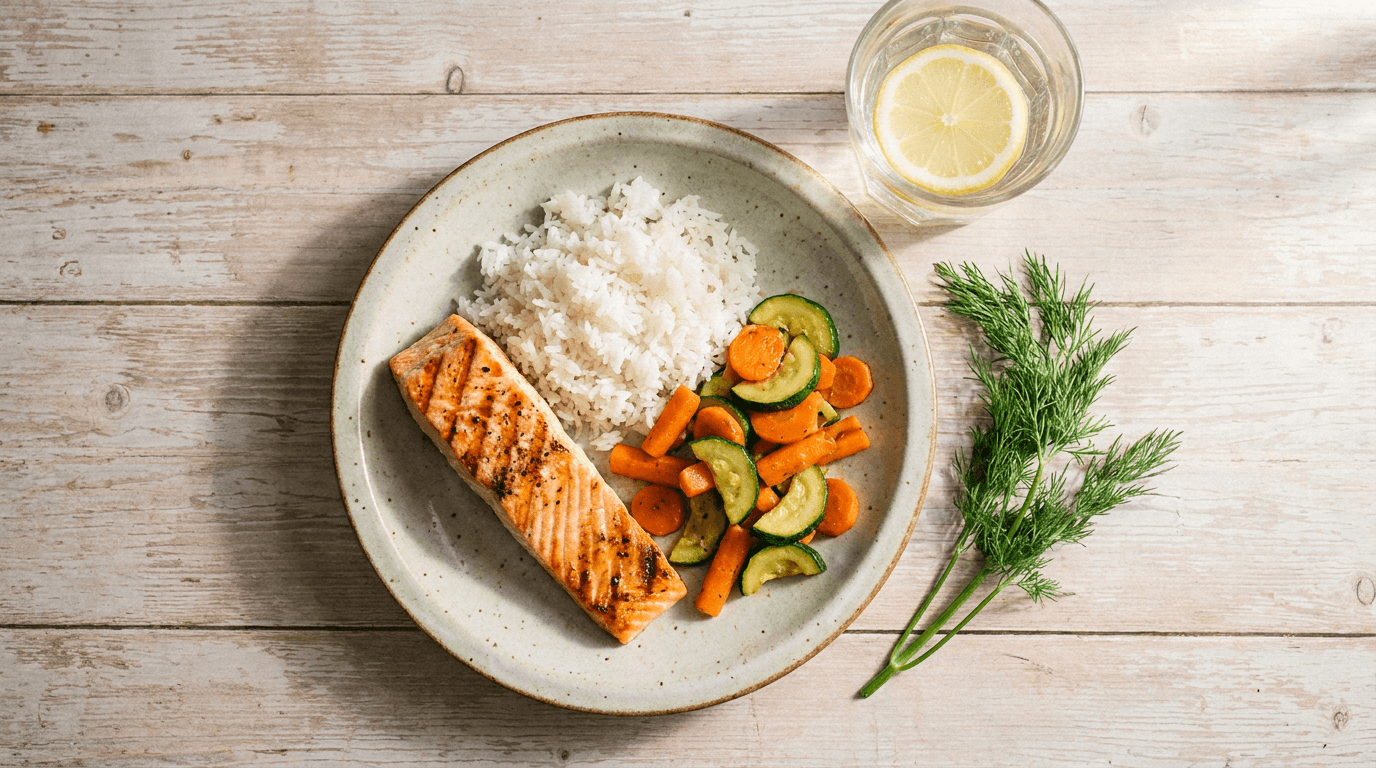
During the settling phase, gentler swaps can help you eat well without stoking the bloat. Reliably low-FODMAP options in a first pass include rice, oats, carrot, salmon, and eggs. You can check the serving thresholds for hundreds of foods, each backed by published research and citations, in the Phase food database.
Practical relief while you work on triggers
Diet is the long game, but a few simple habits ease an aching, bloated back in the moment:
- Move gently. A short walk after meals helps clear gas and loosens the muscles you brace when bloated. Stretching and yoga poses that open the abdomen and lower back can bring quick relief.
- Apply heat. A warm compress or hot-water bottle on the lower back relaxes tense muscles and can dampen gut cramping too.
- Mind the gut-brain axis. Stress amplifies both IBS and pain perception. Slow breathing, mindfulness, and decent sleep are not fluff here; they directly influence how much your nervous system turns up the volume.
- Watch posture. If you notice yourself hunching or arching to accommodate bloating, gentle core awareness reduces the mechanical strain.
- Stay regular and hydrated. Constipation adds to distension and pressure, so enough fluid and gentle fiber (introduced cautiously) keep things moving.
The bottom line
So, can IBS cause back pain? Yes, most often through bloating, referred nerve signals, and a sensitized gut-brain system, and it usually eases as your digestion settles. It is generally not a sign of anything sinister, but back pain has other causes too, so stay alert to the red flags above and see a doctor or dietitian if anything feels off or fails to improve. Managing IBS well rarely means a cure, but it does mean fewer flares, less bloating, and, for many people, a quieter back.
Want a calmer gut and a clearer read on your triggers? Phase turns the low-FODMAP protocol into simple daily steps: check any food's serving threshold, log meals, and pinpoint what your body actually reacts to. Download the app to get started.