
Scan any food
The research tells us which FODMAPs matter. Phase checks a barcode, photo, or menu against that data and flags hidden ones like inulin, garlic powder, and high-fructose corn syrup.
See the scannerThe low-FODMAP diet is one of the most-studied dietary therapies in gastroenterology. Here's what the clinical evidence actually shows — and exactly how Phase turns that research into the food decisions you make every day.

~50% lower
IBS symptom scores
In Monash's landmark 2014 feeding trial, gut symptom scores roughly halved on a low-FODMAP diet versus a typical diet.2
Ranked #1
dietary therapy for IBS
A 2022 network meta-analysis in Gut placed the low-FODMAP diet first for global symptoms among all diets studied.3
Up to 3 in 4
people feel relief
Monash reports meaningful symptom improvement in up to three-quarters of people with IBS who follow the diet.1
What the evidence says
The low-FODMAP diet was developed at Monash University in Melbourne, with the first research published in 2005 by gastroenterologist Peter Gibson and dietitians Sue Shepherd and Jane Muir.1 FODMAP stands for Fermentable Oligosaccharides, Disaccharides, Monosaccharides And Polyols — a family of short-chain carbohydrates, grouped for everyday use into fructose, lactose, fructans, GOS, and polyols.
In the landmark 2014 single-blind crossover trial, people with IBS ate provided diets for three weeks each. Overall gut-symptom scores were roughly half as severe on the low-FODMAP diet as on a typical diet (22.8 vs 44.9 on a 100-point scale).2 A 2016 meta-analysis found consistently reduced symptom severity and improved quality of life,4 and a 2022 network meta-analysis in Gut — pooling 13 randomized trials — ranked the low-FODMAP diet first among all dietary therapies for global IBS symptoms.3
That's an unusually strong evidence base for a dietary intervention — which is exactly why we built Phase on this protocol rather than a generic “trigger foods” list.
The mechanism
It isn't an allergy or an intolerance in the usual sense. The trigger is physical.5,7Studies show it's the gut's sensitivity to being stretched — not the sheer volume of gas — that produces symptoms in IBS.6
FODMAPs are poorly absorbed and osmotically active — they draw extra water into the small intestine.
Reaching the colon, they're rapidly fermented by gut bacteria, producing hydrogen and methane gas.
The added water and gas stretch the bowel. In a sensitive gut, that distension registers as pain and bloating.
This is also why serving size matters so much: the same food can be comfortable in a small portion and symptomatic in a large one, because FODMAPs stack across a meal.
A protocol, not a restriction
Staying in strict elimination isn't the win — and it isn't harmless. Prolonged restriction lowers beneficial gut bacteria and narrows nutrition,7 which is why reintroduction and personalization are the whole point.8 Most apps stop at elimination. Phase walks you all the way through.
Temporarily lower all high-FODMAP foods to calm symptoms and establish a clear baseline. This phase is diagnostic — never meant to be permanent.
Systematically re-challenge one FODMAP group at a time, at rising doses, to find exactly which ones — and how much — your gut can handle.
Build the least-restrictive long-term diet that keeps you comfortable, restricting only what you actually react to.
Where our data comes from
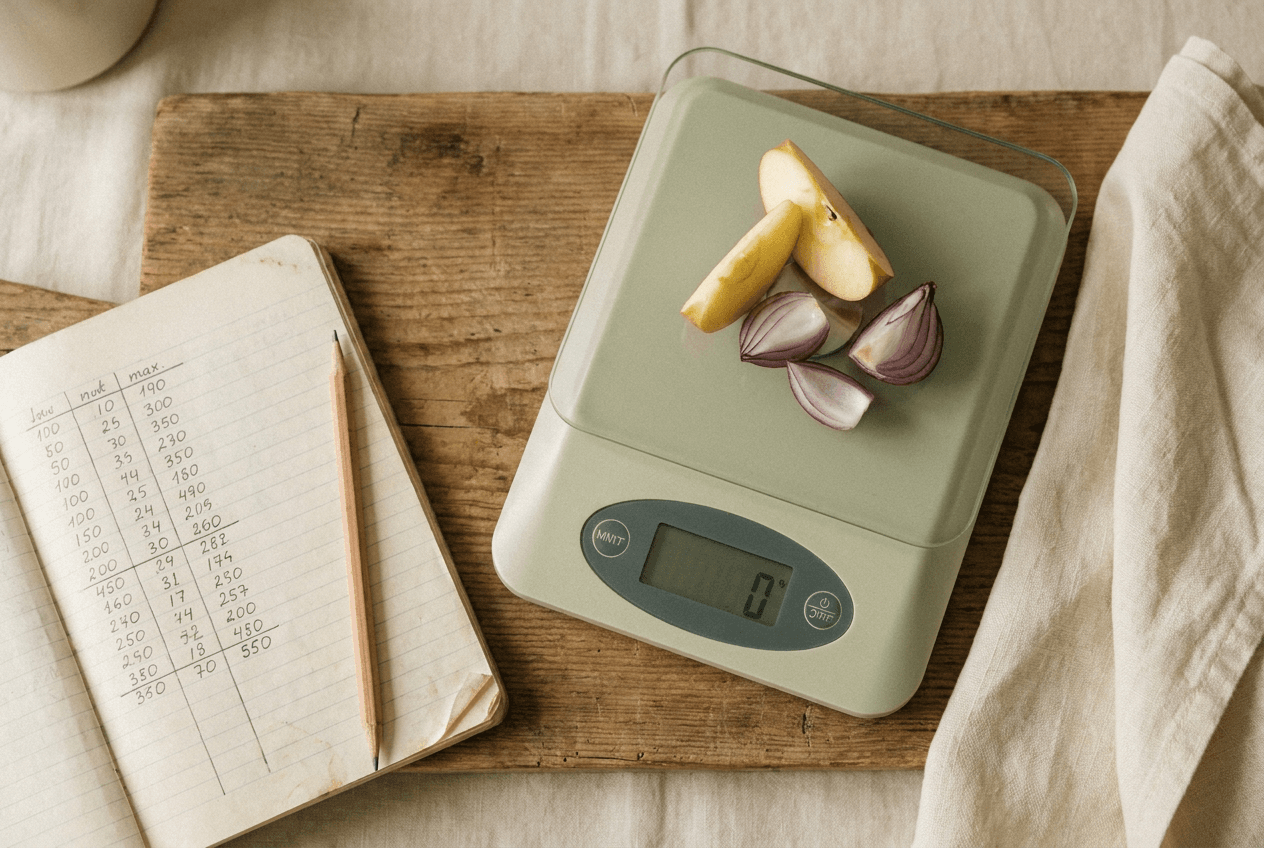
FODMAP content is measured in the laboratory — foods are analyzed per gram and classified against validated low, moderate, and high serving cutoffs.12It's why a food can be green at one serving and red at another.
Sourced from the research. Ratings are drawn from peer-reviewed FODMAP studies and laboratory food-composition data — the same evidence base clinicians use.
Serving thresholds, per food. Every food carries the serving size where it tips from low to high — because the dose is what triggers symptoms, not the food itself.
Transparent confidence. Each rating shows how it was verified and how confident it is. When a food can't be matched, Phase says so instead of guessing.
Science, in your pocket
Evidence only helps if you can act on it at the grocery store and the dinner table. That translation is what Phase is for.
The research tells us which FODMAPs matter. Phase checks a barcode, photo, or menu against that data and flags hidden ones like inulin, garlic powder, and high-fructose corn syrup.
See the scannerBecause dose is everything, every food page shows the low, moderate, and high serving thresholds — pulled from the same lab-measured database.
See the food listPhase runs the structured re-challenge the protocol calls for — one FODMAP group at a time, at escalating doses, with symptom check-ins.
See the methodThe evidence says the diet should end in personalization. Phase turns your results into a map of how much of each FODMAP group you can eat comfortably.
See how it worksEndorsed by clinical guidelines
2021
Recommends a limited trial of a low-FODMAP diet to improve global IBS symptoms.9
2016
Positions the low-FODMAP diet as an evidence-based second-line dietary therapy, delivered by a trained dietitian.10
2015
Advises the diet be guided by a healthcare professional with expertise in dietary management of IBS.11
Honest about the limits
Credibility means being straight about the caveats:
IBS is a long-term condition. The diet reduces symptoms; it doesn't remove the underlying sensitivity.
Guidelines place it after general diet and lifestyle advice, and the overall quality of evidence is rated low — real, but not a guarantee for every person.
The strict phase can reduce beneficial gut bacteria and narrow nutrition. It's a diagnostic step, not a destination.
Phase supports your care and keeps a clear record — but for diagnosis and the elimination phase, a FODMAP-trained clinician is the gold standard. Phase isn't a substitute for medical advice.
This page is educational and not medical advice. Talk to a doctor or registered dietitian before starting the low-FODMAP diet, especially the elimination phase.
Frequently asked
Yes. It was developed by researchers at Monash University and has been tested in randomized controlled trials and meta-analyses. A 2022 network meta-analysis in Gut ranked it first among dietary therapies for global IBS symptoms. It's endorsed as an evidence-based option by the American College of Gastroenterology and the British Dietetic Association.
In the landmark 2014 Monash trial, IBS symptom scores roughly halved on a low-FODMAP diet versus a typical diet. Monash reports that up to 3 in 4 people with IBS feel meaningful relief. Response is individual — the point of the diet is to find your own tolerances, not to stay restricted.
No. The low-FODMAP diet manages symptoms; it doesn't cure IBS. Clinical guidelines position it as a structured trial, and the restrictive first phase is meant to be temporary — you reintroduce foods to build the least-restrictive diet that keeps you comfortable.
Where possible, yes — NICE and the BDA recommend the diet be guided by a clinician with FODMAP expertise, especially during elimination. Phase is built to support that care, not replace it: it makes day-to-day execution easier and gives your dietitian a clear record to work from.
From peer-reviewed FODMAP research and laboratory-measured food composition, with serving-size thresholds applied per food. Every rating shows how it was verified and how confident it is — and when a food can't be matched, Phase tells you rather than guessing.

Phase brings the research to every meal — free during the iPhone beta.