
Feeling queasy alongside the cramps and bloating? You are not imagining it. Nausea is one of the most under-discussed symptoms of irritable bowel syndrome, and many people spend months wondering whether their upset stomach and their gut are even connected. So, does IBS cause nausea? The short answer is yes, IBS can cause nausea, and understanding why it happens is the first step toward calmer days.
Does IBS cause nausea? What the research shows
IBS is defined by abdominal pain linked to changes in how often you go and how your stools look. Nausea is not part of the official diagnostic criteria, but it is a common companion symptom. Surveys of people with IBS consistently find that a meaningful share report regular queasiness, and it tends to be more frequent in people with IBS-C (constipation-predominant) and in those who also have reflux or anxiety.
In other words, nausea is not a sign that something is "wrong" with your diagnosis. It is a recognized part of the wider IBS picture for a large group of people. That said, persistent or severe nausea always deserves a proper look from a clinician, because it can also point to other conditions that need different treatment.
Why IBS makes you feel sick
There is no single mechanism. Nausea in IBS usually comes from a combination of overlapping factors.
The gut-brain axis
IBS is now understood as a disorder of gut-brain interaction. Your digestive tract and your brain are in constant two-way conversation through nerves, hormones, and immune signals. In IBS, that communication is turned up too high, a state often called visceral hypersensitivity. Signals that a person without IBS would never notice, such as normal stretching after a meal, get amplified and can register as pain, urgency, or nausea. This is also why stress and worry can trigger a wave of queasiness even when you have eaten nothing unusual.
Bloating and distension
For many people, nausea rides on the back of bloating. When gas and pressure build up in a sensitive gut, the stomach can feel full, tight, and unsettled. High-FODMAP foods are a classic driver here because poorly absorbed carbohydrates ferment in the large intestine and pull in water, producing gas and distension. Common culprits like onion and garlic are especially potent, which is why so many people feel queasy after a garlicky restaurant meal without knowing why.
Slow motility and delayed emptying
Some people with IBS, particularly the constipation subtype, have sluggish gut motility. When food and gas move through slowly, or when the stomach empties more slowly than it should, that backed-up, heavy feeling can tip over into nausea. Large, rich, or high-fat meals make this worse because fat slows stomach emptying further.
Overlapping conditions
Nausea in IBS is often not purely IBS. Reflux (GERD), functional dyspepsia, migraine, and anxiety disorders frequently travel alongside IBS, and each can produce nausea on its own. It is common to have two of these at once. Caffeine is a shared trigger across several of them, so a strong morning espresso or a couple of black coffees can stir up both reflux and gut sensitivity in one go.
Foods and habits that tend to trigger the queasiness
Triggers are individual, but a few patterns show up again and again:
| Trigger | Why it can cause nausea |
|---|---|
| Large, high-fat meals | Slow stomach emptying, heavy full feeling |
| High-FODMAP foods | Gas, bloating, and distension |
| Caffeine and alcohol | Irritate the gut lining, worsen reflux |
| Skipping meals | Empty stomach acid, then overeating later |
| Eating too fast | Swallowed air, sudden distension |
Fructose-heavy foods and sweeteners can also contribute. An apple on an empty stomach or a drizzle of honey in tea delivers a load of excess fructose that a sensitive gut may struggle with. The point is not to fear these foods forever, but to notice whether they cluster around your worst days.
Practical ways to ease IBS nausea
You can often take the edge off queasiness with a few consistent habits.
Eat smaller, more regular meals. Big meals overload a sensitive, slow-moving gut. Spreading your food across smaller portions keeps distension and stomach acid in check. Do not skip meals to avoid symptoms; an empty stomach often makes nausea worse.
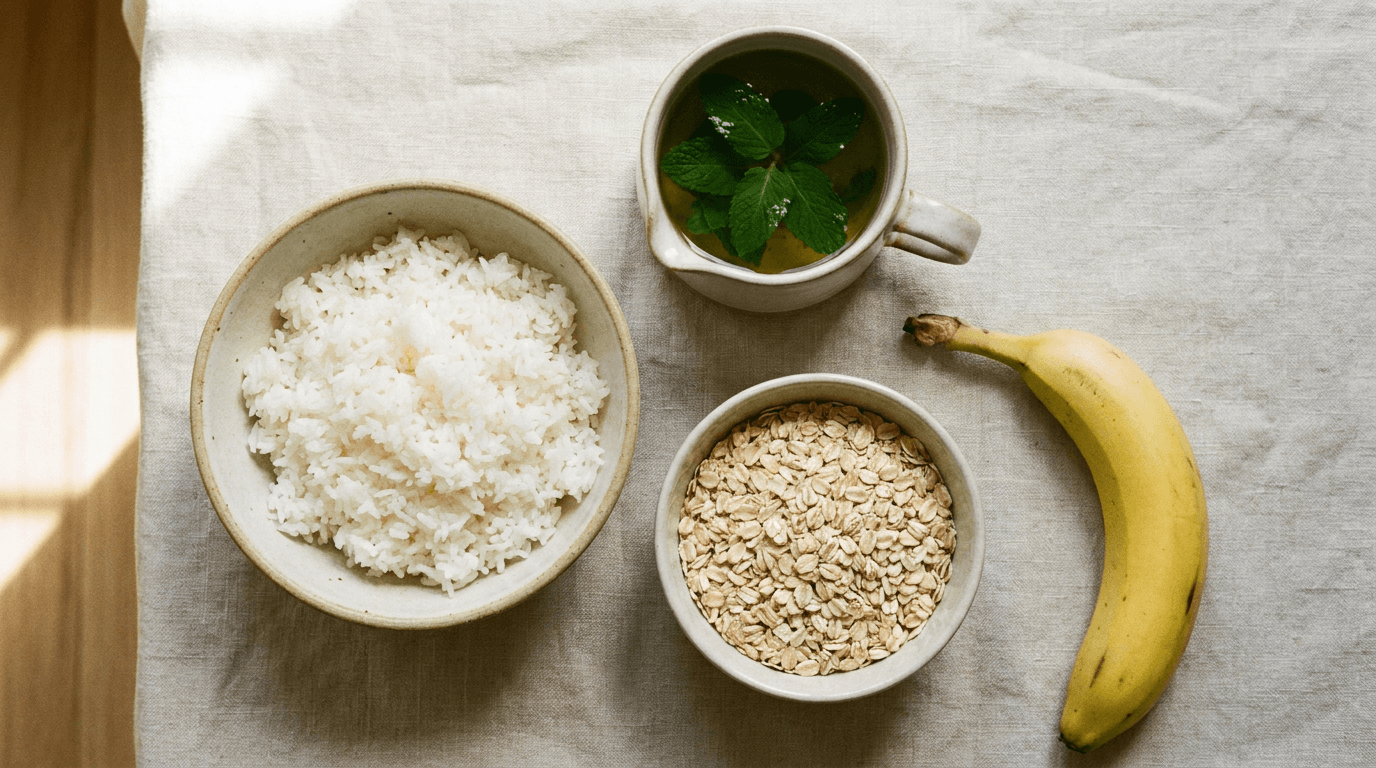
Lean on gentle, low-FODMAP staples during flares. Plain, easy-to-digest foods give your gut less to react to. Options like white rice, oats, and a firm unripe banana are usually well tolerated and settle heavier than raw, gassy vegetables.
Try peppermint. Peppermint has a long track record for easing IBS symptoms, and a warm cup of peppermint tea after eating is a low-risk way to calm both gut spasm and queasiness. Ginger is another traditional option worth a try.
Slow down and sit upright after eating. Eating quickly means swallowing air, which adds to bloating. Staying upright for a while after meals helps if reflux is part of your nausea.
Manage the brain side of the gut-brain axis. Because stress amplifies gut signals, calming practices genuinely help. Slow breathing, gentle walks, gut-directed hypnotherapy, and cognitive behavioral therapy all have evidence behind them for IBS. This is not "it's all in your head"; it is working with the biology of the connection.
Find your personal triggers instead of guessing. The most reliable way to cut nausea is to identify which foods your gut reacts to. A structured low-FODMAP approach does exactly this. It is worth reading our low-FODMAP diet guide to understand the three phases, and you can check serving thresholds for individual foods in the Phase food database.
When to see a doctor
Nausea that is mild, comes and goes, and clearly tracks with your gut symptoms is usually consistent with IBS. But you should book an appointment, and not simply manage it at home, if you notice any of these:
- Vomiting, especially if it is frequent or you cannot keep fluids down
- Unintentional weight loss
- Blood in your stool or black, tarry stools
- Difficulty swallowing or persistent upper-abdominal pain
- Nausea that wakes you at night or is getting steadily worse
- Symptoms that start for the first time after age 50
These are red flags that point away from simple IBS and toward conditions that need investigation. A doctor or dietitian can also help you build a plan that addresses reflux, anxiety, or slow motility if those are feeding your nausea.
The bottom line
Yes, IBS can cause nausea, most often through bloating, an oversensitive gut-brain axis, slow motility, and overlapping conditions like reflux and anxiety. It is common, it is real, and it usually responds well to smaller meals, gentler foods, stress care, and pinning down your personal triggers.
Phase walks you through the full low-FODMAP protocol, checks any food's serving thresholds against published research, and helps you find the specific triggers behind your symptoms. Start finding your triggers with Phase and trade guesswork for a plan.