
Your gut is cramping, you're doubled over, and you typed "how to relieve IBS pain instantly" with one hand while the other pressed against your belly. First, breathe. Nothing is truly instant with IBS, but there are genuine, fast-acting tactics that can take the edge off a flare within minutes, and this page walks you through them calmly, in order.
The honest truth about "instant" relief
Let's be straight with each other, because you deserve honesty over hype. IBS pain comes from a mix of gut spasm, gas and bloating stretching the bowel wall, and an oversensitive gut-brain connection that amplifies signals other people wouldn't even notice. None of that switches off like a light. But you can interrupt the pain loop quickly. Heat relaxes cramping muscle in minutes. Slow breathing calms the nervous system that's cranking up the volume on your pain. Gentle movement helps trapped gas move along. So when we say "fast relief," we mean real minutes-to-an-hour relief, not a miracle. That framing matters, because chasing a nonexistent instant cure just adds panic, and panic makes IBS worse.
Fast relief, in the order to try it
1. Heat on your belly
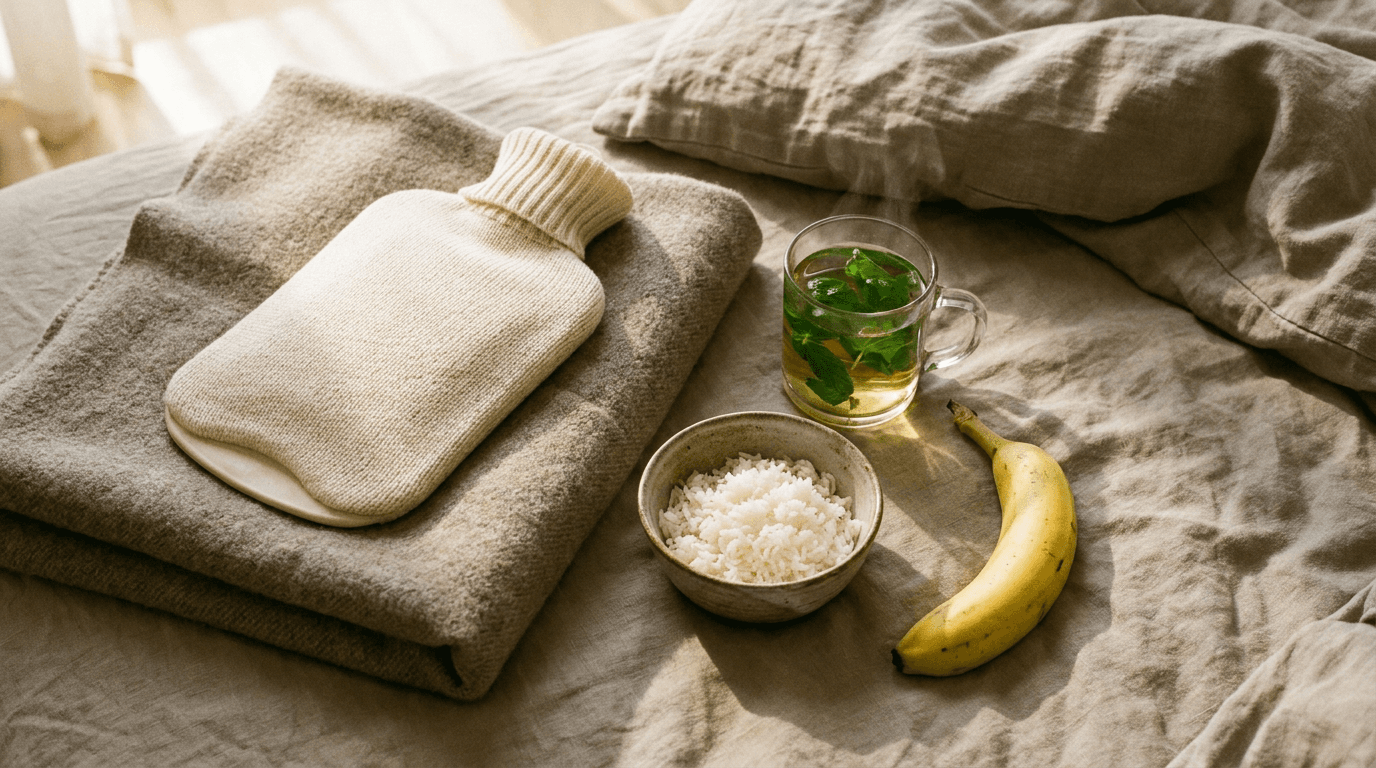
This is the closest thing to a reliable quick win. A hot water bottle, heat pad, or even a warm shower against your abdomen helps relax the smooth muscle that's spasming. Studies on visceral pain suggest heat can genuinely dial down cramp intensity. Wrap the source so you don't burn your skin, lie down, and give it 10–15 minutes. Many people feel the sharpest edge soften in that window.
2. Peppermint
Peppermint oil is one of the few IBS remedies with solid research behind it. It relaxes gut muscle and can ease cramping and spasm. Enteric-coated peppermint oil capsules are designed to release lower in the gut, and a warm cup of peppermint tea can be soothing in the moment too. A quick caution: if your main problem is reflux or heartburn, peppermint can occasionally make that worse, so notice how your body responds.
3. Slow, low breathing
This sounds too simple to work. It isn't. Your gut and your nervous system are in constant conversation, and shallow, panicked breathing tells your body you're under threat, which tightens everything. Try this: breathe in through your nose for a count of four, letting your belly rise, then out slowly for a count of six or seven. The long exhale is the part that flips your body into "rest and digest" mode. Do it for two or three minutes. It won't just distract you; it measurably calms the pain-amplifying signals.
4. Change your position
Gas pain responds to gravity and gentle pressure. Two positions help most people:
- Knees to chest, lying on your back or side, hugging your legs in. This can help release trapped wind.
- Child's pose, kneeling and folding forward with your belly resting on your thighs, which applies gentle warmth and pressure.
Rolling slowly from side to side while lying down can also nudge gas along the bowel.
5. Gentle movement
When you're in pain the instinct is to stay frozen, but a slow walk, even just around the room or up and down a hallway, encourages your gut to move gas and stool through. You're not going for a run. You're giving a stalled system a nudge. Five to ten minutes of easy movement often beats lying rigidly still.
6. Sip warm water and loosen your waistband
Warm water can be comforting and helps keep things moving, especially if constipation is part of the picture. And undo the button. A tight waistband against a bloated, tender belly adds pressure you don't need.
Quick relief tactics at a glance
| Tactic | Why it helps | Time to feel it |
|---|---|---|
| Heat pad on abdomen | Relaxes muscle spasm | 10–15 min |
| Peppermint | Eases gut cramping | 20–30 min |
| Slow belly breathing | Calms gut-brain pain signals | 2–5 min |
| Knee-to-chest / child's pose | Releases trapped gas | Minutes |
| Gentle walk | Moves gas and stool along | 5–10 min |
| Warm water, loosen clothing | Comfort, reduces pressure | Immediate ease |
What to avoid when you're mid-flare
Just as important as what helps is what quietly makes things worse. When you're already in pain, steer clear of:
- High-FODMAP trigger foods. This is not the moment for onion, garlic, or a plate of baked beans. These are among the most common gut irritants, and adding them to an active flare is pouring fuel on the fire. If you need to eat, reach for something gentle like plain white rice, oats, a banana that's still firm and barely ripe, or a piece of chicken breast.
- Carbonated and caffeinated drinks. Fizzy drinks add gas; strong black coffee can stimulate an already-irritable gut.
- Large meals. A big plate stretches the bowel and can intensify pain. Small and simple wins.
- Sugar-free gum and mints containing sorbitol or xylitol. These sugar alcohols are notorious for triggering gas and cramping.
If you're not sure whether a food is likely to settle you or set you off, you can check its serving thresholds in the food database before you eat.
Preventing the next flare
Fast relief is patching the roof mid-storm. The real fix is understanding why the storm keeps coming. IBS is highly individual: the food that wrecks one person's gut is harmless for another. That's the whole reason the structured low-FODMAP diet exists, to help you systematically eliminate common triggers, then reintroduce them one group at a time so you learn your own personal thresholds rather than living in fear of every meal. Beyond diet, regular movement, decent sleep, and stress management genuinely reduce flare frequency, because the gut-brain axis works both ways. It's not "in your head," but your head is part of the system.
When fast relief isn't the answer: red flags
Most IBS pain, however awful, is not dangerous. But some symptoms are not IBS and need urgent medical attention, not a heat pad. Seek same-day or emergency care if you have:
- Severe, sudden, or unrelenting abdominal pain that keeps worsening
- Blood in your stool, or black, tarry stools
- Vomiting blood, or persistent vomiting
- A high fever with the abdominal pain
- Unexplained weight loss
- A hard, rigid, or extremely tender belly
- Difficulty swallowing, or a lump in your abdomen
- New severe symptoms if you're over 50, or a family history of bowel or ovarian cancer
IBS is a diagnosis of managing symptoms, not something to self-diagnose while ignoring warning signs. If pain is new, changing, or accompanied by any of the above, please see a doctor. And if flares are frequent enough that you're searching for emergency relief often, that's a signal to work with a GP or a registered dietitian on a proper plan.
You've got this
A flare feels endless in the moment, but it will pass, and now you have an ordered set of things to try instead of just white-knuckling it. Heat, peppermint, slow breathing, a change of position, a gentle walk. Start at the top and work down.
When you're ready to stop firefighting and start finding your actual triggers, Phase walks you through the full eliminate, reintroduce, and personalise protocol, and lets you check any food's serving thresholds against published research. Download Phase and build the widest, calmest diet your gut can handle.