
Type "is IBS curable" into any search bar and you'll hit two extremes: miracle-cure supplements on one side, and grim "you'll suffer forever" forums on the other. The honest answer sits in between, and it's far more hopeful than the scaremongers suggest. There's no pill or protocol that permanently erases irritable bowel syndrome, but IBS is one of the most manageable chronic conditions out there — and plenty of people reach a point where symptoms barely register in daily life.
The short answer: no cure, but highly manageable
IBS is a functional gut disorder. That means your digestive tract looks structurally normal on scans and scopes, but the way your gut and brain communicate has become oversensitive. Nerves fire too readily, muscles contract out of rhythm, and normal digestion gets read as pain, bloating, or urgency.
Because there's no single broken part to fix, there's no single thing to "cure." But that same feature is why IBS responds so well to management. When you calm the triggers and retrain the gut-brain signals, symptoms can fade to the background — sometimes for months or years at a stretch. Researchers often describe treated patients as being in remission rather than cured: the underlying sensitivity is still there, but it's quiet.
So if you're asking "is IBS curable" because you want your life back, that's absolutely realistic. If you're asking because someone sold you a €200 "gut reset," read on first.
Why "cure" scams don't work
The uncertainty around IBS creates a perfect market for false promises. Watch for these red flags:
- "Permanently cures IBS in 30 days." Nothing does. Anyone guaranteeing a permanent fix is guessing or lying.
- Detox teas and colon cleanses. Your colon cleans itself. These often contain harsh laxatives that worsen the exact symptoms you're trying to settle.
- Single-supplement miracles. No standalone probiotic, herb, or powder has been shown to abolish IBS across the board.
- "Cut out all carbs / all fiber / all fruit forever." Blanket elimination usually trades one problem for malnutrition and a smaller, more anxious diet.
Real management is less glamorous and far more durable. Here's what the evidence actually supports.
What actually works
1. The low-FODMAP diet (done properly)
FODMAPs are fermentable carbohydrates that pull water into the gut and ferment quickly, producing gas. In sensitive guts, that's a recipe for bloating and pain. A structured low-FODMAP approach is one of the best-studied dietary interventions for IBS, with roughly 3 in 4 people getting meaningful relief.
The key word is structured. Low-FODMAP is not meant to be permanent. It runs in three phases: eliminate high-FODMAP foods for a few weeks, reintroduce one FODMAP group at a time to find your personal thresholds, then personalise the widest possible diet your gut tolerates. Skipping straight to "avoid everything forever" is exactly the trap that makes people miserable.
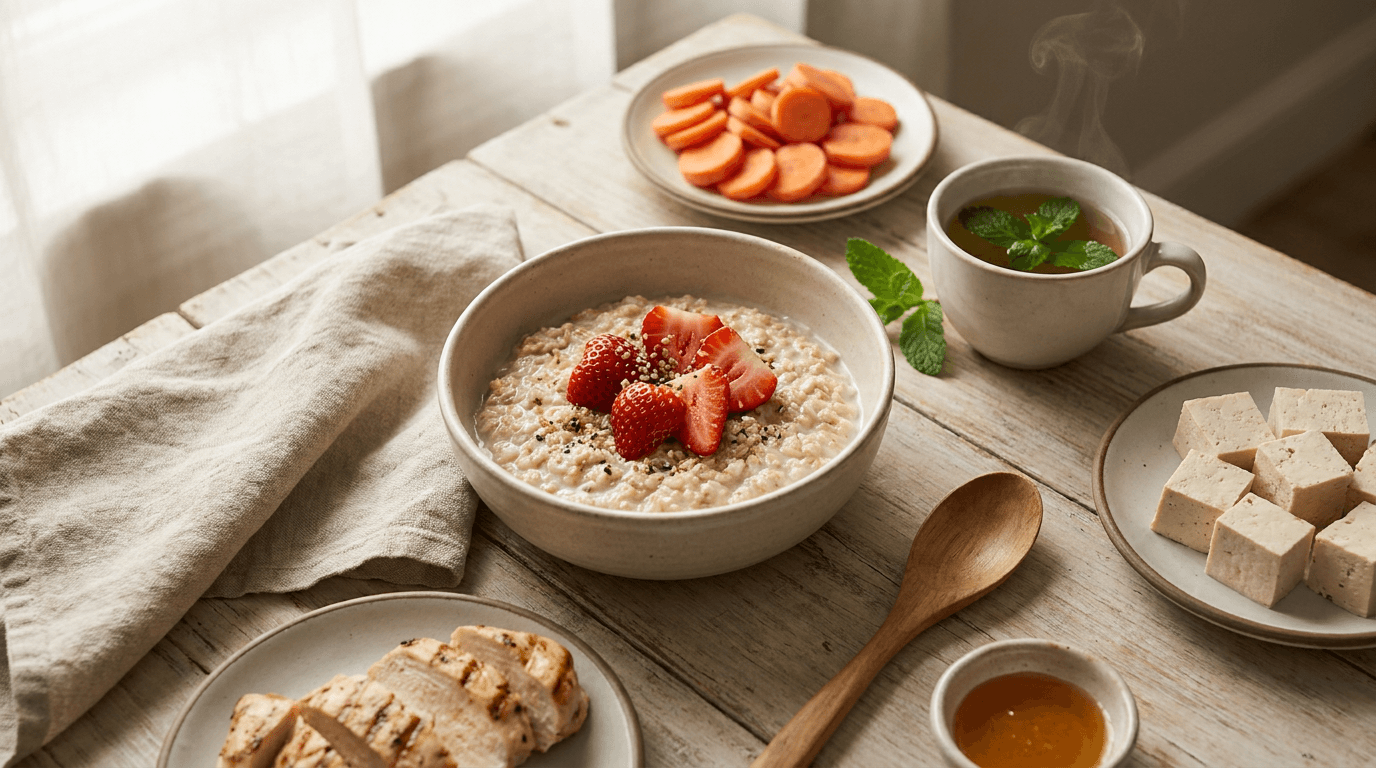
Some foods are reliably gentle in normal servings — firm tofu, chicken breast, carrot, oats, and strawberry are common low-FODMAP staples. Others, like garlic and onion, are high-FODMAP even in small amounts and are among the most frequent hidden triggers. And many foods are fine in a modest portion but not a large one — avocado is a classic example where serving size decides everything.
If you're new to all this, start with our low-FODMAP diet guide, then browse the food database to check where your everyday meals land.
2. Gut-brain therapies
Because IBS lives at the intersection of gut and nervous system, treatments that target that connection work surprisingly well — often as well as diet. The best-evidenced are:
- Gut-directed hypnotherapy, which trains your nervous system to dial down gut sensitivity.
- Cognitive behavioural therapy (CBT) adapted for IBS, which breaks the anxiety-symptom-anxiety loop.
These aren't "it's all in your head" dismissals. The gut-brain axis is a real, physical communication network, and calming it produces real, physical symptom relief. Many people who plateau on diet alone find a second wave of improvement here.
3. Fiber — the right kind
Fiber advice for IBS is nuanced. Soluble fiber (found in oats, psyllium, and peeled fruit) tends to help, especially for constipation-predominant IBS. Insoluble fiber (wheat bran, tough skins) can aggravate symptoms in some people. The goal isn't maximum fiber — it's the right type, introduced slowly with plenty of water.
4. Medications and targeted support
Depending on your dominant symptom, a doctor might suggest antispasmodics for cramping, specific agents for diarrhoea or constipation, or low-dose neuromodulators that quiet gut nerves. Peppermint oil has decent evidence for cramping and bloating. None of these "cure" IBS, but they can take the edge off while dietary and behavioural changes do the deeper work.
5. Sleep, stress, and movement
Unsexy but genuinely effective. Poor sleep and high stress amplify gut sensitivity; regular gentle movement helps transit and mood. These lifestyle levers won't fix IBS alone, but they raise the floor — meaning your triggers have less to push against.
Finding your triggers is the real win
Here's the empowering part: IBS is deeply individual. Two people can have identical diagnoses and completely different trigger lists. One reacts to lactose in milk (cow); another handles dairy fine but falls apart after apple or honey. The scam merchants sell one-size-fits-all. The actual solution is one-size-fits-you.
That's why the reintroduction phase matters so much. It converts a scary, restrictive elimination diet into a precise, personal map: these foods, in these amounts, are fine; those are your triggers. Once you have that map, you're not "on a diet" anymore — you're just eating the way your gut prefers, with the occasional trade-off you choose consciously.
What "better" realistically looks like
Set the right expectation and you'll actually get there. "Better" with IBS usually means:
- Predictable digestion most days
- Knowing which foods to enjoy freely and which to keep small
- Flare-ups that are shorter, milder, and explainable
- Freedom to eat out, travel, and socialise without dread
That's not a cure. It's arguably better than chasing one — because it's real, it's sustainable, and it puts you in control.
The bottom line
Is IBS curable? Not in the "gone forever, guaranteed" sense — and be wary of anyone who says otherwise. But it is genuinely, reliably manageable, and a huge number of people live essentially symptom-free once they've done the work of finding their triggers and calming their gut-brain connection.
If you're ready to stop guessing and start mapping what your gut actually tolerates, Phase walks you through all three phases step by step — checking serving thresholds, logging meals, and pinpointing your personal triggers with research-backed data. Download Phase and take the guesswork out of feeling better.
IBS symptoms can overlap with conditions that need medical attention. If you have unexplained weight loss, bleeding, or new symptoms after age 50, see a doctor before starting any elimination diet — and consider working with a registered dietitian.