
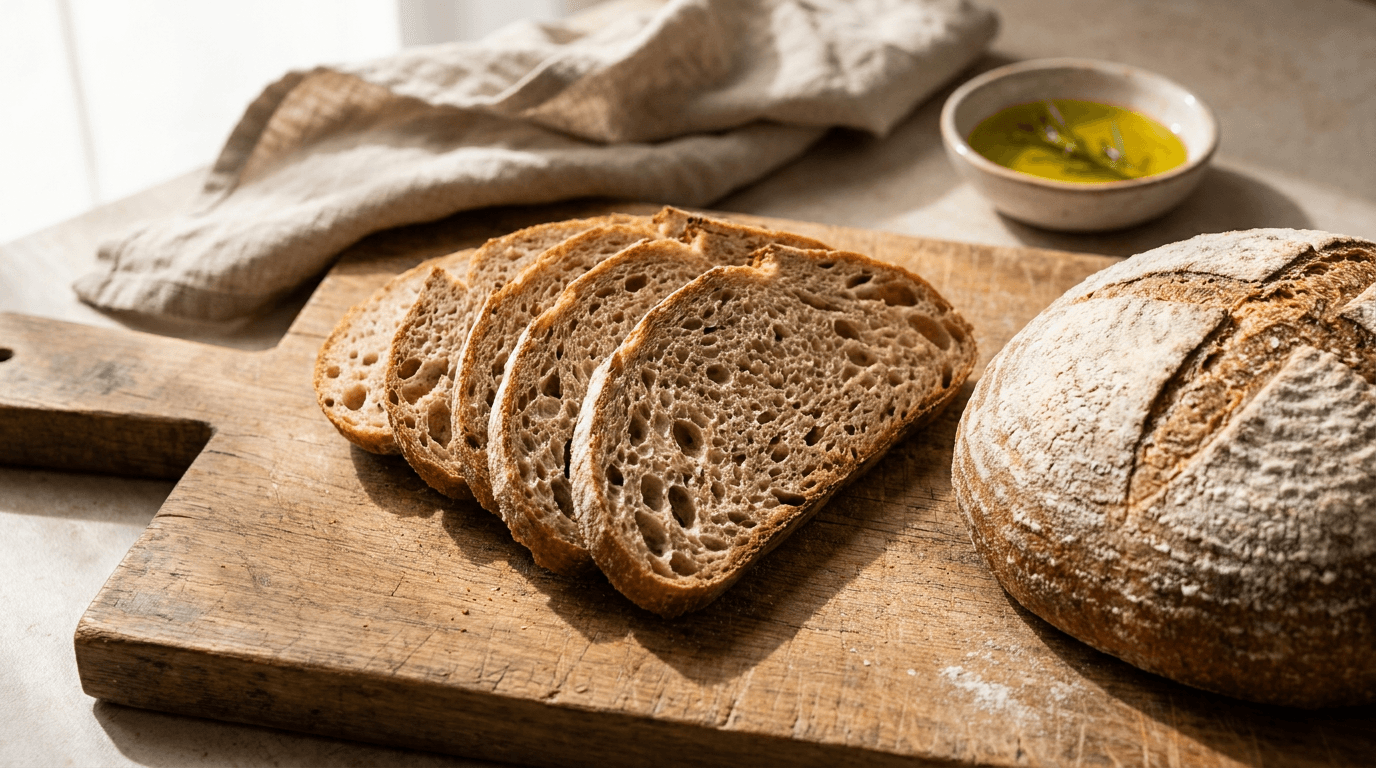
Bread is the food most people with IBS assume they have to give up, and it's usually the first thing they miss. The good news: you don't have to quit bread on a low-FODMAP diet. Some breads are genuinely low in FODMAPs, some can be made gut-friendly by fermentation, and knowing the difference comes down to reading a label the right way.
This guide walks through which loaves are low-FODMAP, which aren't, and why traditional sourdough earns its place at the table. For the bigger picture on how the whole approach works, start with our low-FODMAP diet guide.
Why bread triggers symptoms in the first place
The problem with most bread isn't gluten. It's fructans — a chain-like carbohydrate (a type of oligosaccharide, the "O" in FODMAP) found in wheat, rye, and barley. Fructans aren't fully absorbed in the small intestine. They travel to the large intestine, where gut bacteria ferment them, producing gas, bloating, and the cramping that sends so many people looking for answers.
Standard supermarket sandwich loaves are made from wheat flour, water, yeast, and salt, then baked quickly. That fast process leaves the fructans intact. Eat two slices and you can easily cross your fructan threshold in one sitting — especially if the rest of your day already includes wheat pasta, cereal, or crackers. Because FODMAPs stack, the total load across the day matters as much as any single food.
Gluten, by contrast, is a protein. Unless you have coeliac disease or a diagnosed wheat allergy, gluten itself is not usually what's upsetting your gut on a low-FODMAP diet. This is why some people feel better on gluten-free bread and wrongly conclude they're "gluten intolerant" — what actually changed was the fructan load.
Low-FODMAP breads: what you can eat
Here's how common breads generally stack up during the elimination phase.
| Bread | FODMAP status | Notes |
|---|---|---|
| Traditional sourdough (spelt or wheat) | Low in a moderate serving | Long fermentation lowers fructans |
| Gluten-free bread | Usually low | Check for added inulin, honey, or apple |
| Regular wheat sandwich bread | High | Fructans intact; small portions only |
| Wholemeal / wholegrain wheat | High | Extra bran can add to the load |
| Rye bread | High (regular); lower if genuine sourdough | Depends entirely on the method |
Traditional sourdough
Properly made sourdough spelt bread is one of the best options for a low-FODMAP diet, and traditional wheat sourdough can work too. The key word is traditional — more on why below.
Gluten-free bread
Most commercial gluten-free loaves are built from rice, corn, potato, or tapioca starch rather than wheat, so they sidestep fructans entirely. They're a reliable staple, but read the label: some brands add inulin or chicory root fibre (both high in fructans), or sweeten with honey or apple, which reintroduces FODMAPs through the back door.
Other bread-shaped options
If you want variety, corn tortillas and plain rice cakes are naturally low-FODMAP and make easy swaps for sandwiches and toast. Oats are also low-FODMAP in standard servings and turn up in some suitable breads and crackers.
Why sourdough fermentation lowers fructans
This is the part that surprises people. Traditional sourdough isn't leavened with fast commercial yeast — it uses a live starter of wild yeast and lactic acid bacteria, and it's left to ferment slowly, often for many hours or overnight.
During that long, slow proof, the bacteria and enzymes in the starter actually break down a large portion of the fructans in the flour before the loaf ever reaches the oven. The result is a bread that starts with the same wheat or spelt but ends up with far fewer of the carbohydrates that trigger symptoms. Research on sourdough fermentation has repeatedly shown this drop in fructan content, which is why a moderate serving of genuine sourdough can be tolerated by many people who react to ordinary wheat bread.
Two conditions have to be met for this to work:
- A genuine sourdough process — a real starter and a long fermentation, not just added flavouring or vinegar for a "sourdough taste."
- A sensible serving. Fermentation lowers fructans; it doesn't erase them. A slice or two is usually fine, half a loaf is not.
Spelt sourdough tends to be a particularly safe bet because spelt is lower in fructans than modern wheat to begin with, and the fermentation lowers it further.
Breads to be cautious with
- Regular wheat sandwich bread, both white and wholemeal wheat, is high in fructans in typical servings. Wholegrain versions add bran, which can pile on more. Small amounts may fit, but they're easy to overdo.
- "Sourdough-style" supermarket loaves are often standard yeasted bread with sourdough flavouring and no meaningful fermentation. These don't get the fructan benefit.
- Garlic bread is a double hit — a wheat base plus garlic, one of the highest-FODMAP foods there is. Garlic and onion are worth avoiding across the board during elimination, and garlic bread combines both risks.
- Multigrain and "high-fibre" loaves frequently contain inulin, chicory root, or added legume flours that push FODMAPs up.
How to read a bread label
Ingredient lists tell you more than any front-of-pack claim. Scan for these red flags:
- Inulin or chicory root fibre — high in fructans, common in "high-fibre" and gut-health breads.
- Honey, apple, pear, or dried fruit — add fructose or polyols.
- Onion or garlic powder — sometimes hidden in flavoured or savoury loaves.
- Wheat, rye, or barley as the base, without a genuine sourdough process.
Green flags to look for: a short ingredient list, a named sourdough culture or "long-fermented," spelt sourdough, or a gluten-free base of rice, corn, or potato without added inulin.
Portion still matters more than any label. Even a low-FODMAP loaf will cause trouble if you eat enough of it alongside other FODMAP sources, so keep servings moderate and space bread out across the day.
The bigger takeaway
Bread is one of the clearest examples of why the low-FODMAP diet is about how much and which type rather than blanket bans. You can keep sourdough and gluten-free options in elimination, and once you reach the reintroduction phase, wheat is one of the most useful fructan sources to test — because getting your normal bread back can transform daily eating.
Not sure whether the loaf in your kitchen makes the cut? Search it in the Phase food database, where serving thresholds are drawn from published research with the sources shown, so you can see exactly why a food lands where it does.
Want bread decisions made simple? Get the Phase app to check any food's serving in seconds, log your meals, and pinpoint which FODMAP groups — including fructans — your gut can actually handle.