
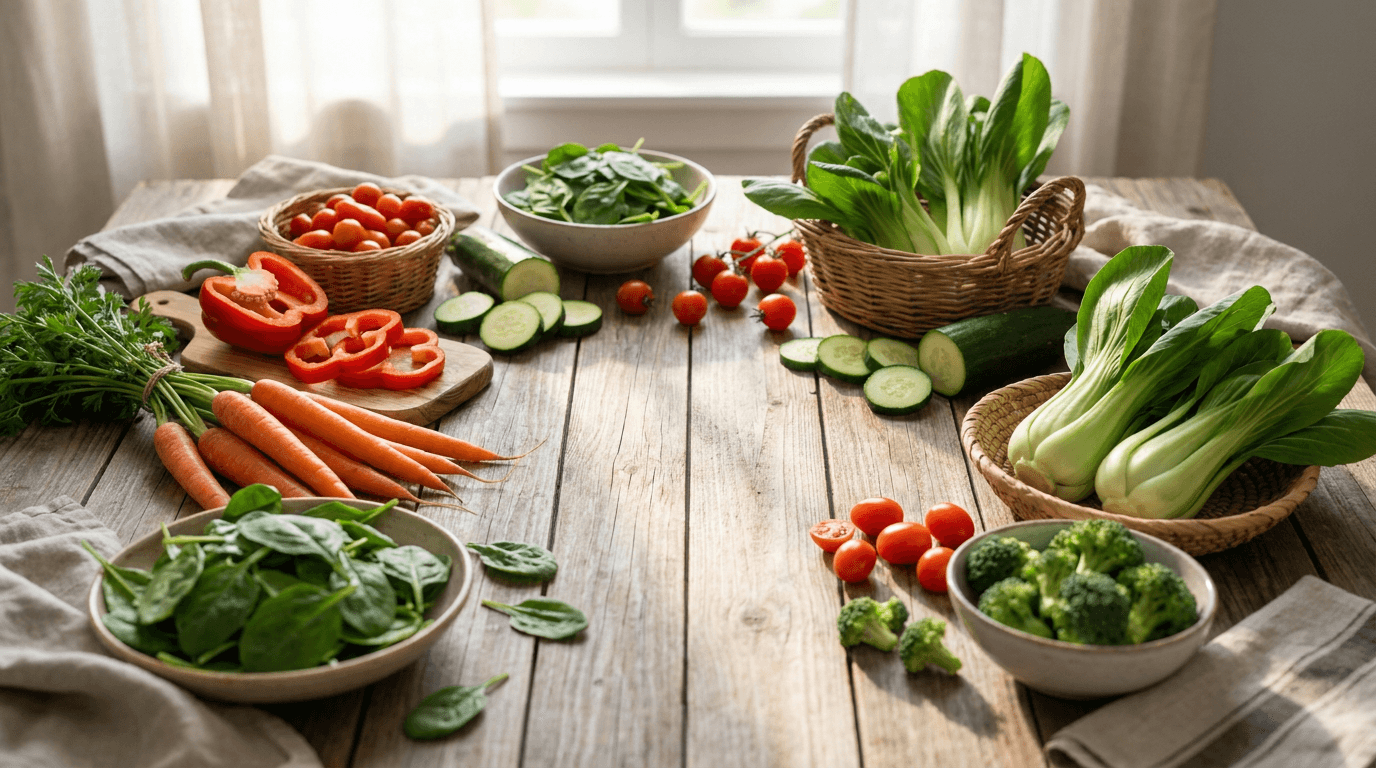
Not all vegetables are created equal when your gut is sensitive. Some low-FODMAP vegetables you can pile on your plate freely, while others are fine in a small handful but turn into a problem in bulk — and a few are worth parking entirely while you settle your symptoms. This guide sorts the produce aisle into a clear list of low-FODMAP vegetables versus the high ones to limit, and explains why serving size changes everything.
If you're new to the approach, start with our low-FODMAP diet guide for the full picture. Here, we're zooming in on vegetables specifically.
Why "low-FODMAP vegetable" depends on the serving
FODMAPs are fermentable carbohydrates — fructans, galacto-oligosaccharides (GOS), polyols, excess fructose, and lactose — that draw water into the gut and feed bacteria that produce gas. In people with IBS, that combination triggers bloating, cramping, and irregular bowel habits.
Here's the part most food lists skip: FODMAP content is dose-dependent. A vegetable isn't simply "safe" or "off-limits." Many are low-FODMAP at a modest serving and only tip into high-FODMAP territory once you eat a larger amount. Broccoli is a classic example — a small serving of the florets sits comfortably low, but a big bowlful stacks up enough fructans to bother a sensitive gut. This is why "how much" matters as much as "what."
The thresholds Phase shows are derived from published research (Varney et al. 2017) combined with food-composition data, with the sources cited on each food page — so you can see the reasoning rather than take a number on faith.
The reliably low-FODMAP vegetables
These vegetables are low-FODMAP at typical serving sizes and make a dependable base for meals during the elimination phase. Load your plate around them:
- Leafy greens: spinach, kale, lettuce, arugula, and bok choy
- Carrot — one of the most forgiving vegetables, low even in generous amounts
- Cucumber, zucchini (in moderation), and eggplant
- Bell peppers (red are gentlest), green beans, and celery in small amounts
- Tomatoes, radishes, and bamboo shoots
- Potatoes — a genuinely free food, and a great source of starch
- Ginger, chives, and the green tops of scallions (more on that below)
These give you color, fiber, and volume without the fermentable load that sets IBS off. Roast them, steam them, or eat them raw — cooking method doesn't change FODMAP content, though gentler cooking is sometimes easier on a reactive gut.
The "small serving only" vegetables
This is the group that trips people up. These vegetables are low-FODMAP in a small portion but climb into high-FODMAP territory as the serving grows. The trick is to enjoy them — just don't make them the centerpiece of a meal.
- Broccoli — florets are gentler than the stalks; keep to a small serve
- Brussels sprouts — a couple are fine; a full side dish is a lot of fructans
- Cauliflower is trickier — it's high in polyols even at modest amounts, so treat it with more caution than broccoli
- Savoy cabbage, snow peas, and sweet corn — all fine small, problematic in quantity
- Butternut squash and beets — sweet, starchy, and easy to overdo
The takeaway: a spoonful of roasted cauliflower alongside a low-FODMAP plate is very different from a cauliflower-based meal. Portion is your dial.
The high-FODMAP vegetables to limit
A short list of vegetables are high-FODMAP even in small amounts, and they're worth avoiding during elimination. The two big ones are the alliums:
- Garlic and onion — both concentrated sources of fructans and the most common hidden triggers in cooking. The fructans are water-soluble but not fat-soluble, which is why garlic-infused oil can give you the flavor without the FODMAPs (the fructans stay behind in the discarded solids). Green scallion tops and chives are excellent low-FODMAP substitutes for that savory hit.
- Leeks (the white part), shallots, and spring onion bulbs — same fructan issue as onion
- Mushrooms — most common varieties are high in polyols (canned or oyster mushrooms are the low-FODMAP exceptions)
- Asparagus, sugar snap peas, and globe artichoke
- Cassava and taro in larger amounts
Onion and garlic hide in stocks, sauces, spice blends, and ready meals, so reading labels matters. "Natural flavoring" and "vegetable powder" are frequent culprits.
Quick-reference vegetable table
| Vegetable | Low-FODMAP status | Notes |
|---|---|---|
| Carrot | Low, generous serving | Very forgiving |
| Spinach / kale / lettuce | Low, generous serving | Free leafy base |
| Potato | Low, generous serving | Great starch source |
| Bell pepper (red) | Low | Green in moderation |
| Bok choy | Low | Gentle Asian green |
| Zucchini | Low, small–moderate | Don't overload |
| Celery | Low, small serving | Polyols build up fast |
| Broccoli | Low, small serving | Florets over stalks |
| Brussels sprouts | Low, small serving | A few, not a bowlful |
| Cauliflower | Limit | High in polyols |
| Sweet corn | Low, small serving | Half a cob-ish |
| Mushroom (common) | High | Polyols; canned is low |
| Asparagus | High | Avoid in elimination |
| Garlic | High | Use infused oil instead |
| Onion | High | Use scallion greens instead |
Values reflect general guidance — for the exact serving thresholds and the research behind each one, check the specific food in Phase's food database.
How this fits into the three phases
Remember that this list describes the elimination phase, where you keep FODMAPs low across the board to calm symptoms. It is not meant to be permanent. Once your gut settles, the reintroduction phase tests one FODMAP group at a time — so you'll systematically challenge fructans (via onion or garlic) and polyols (via cauliflower or mushroom) to learn your personal ceiling. Plenty of people discover they tolerate more broccoli or a bit of onion than the strict phase suggests.
The goal is the widest, most varied diet your gut can handle — not a lifetime of avoiding vegetables. Restriction is a diagnostic tool, not the destination, and vegetable variety matters for long-term gut health.
A few practical tips
- Build meals around the "reliably low" group, then treat "small serving" vegetables as accents.
- Batch garlic-infused olive oil at the start of the week to keep flavor without fructans.
- Space out your small-serve vegetables across the day rather than stacking several in one meal — FODMAPs add up cumulatively.
- If a meal disagrees with you, note the portion, not just the food. It's often the amount.
Working out which vegetables — and how much of each — your gut tolerates is easier when you're not doing the math by hand. Phase checks any food's serving threshold, logs your meals, and helps you spot personal triggers as you move through reintroduction. Download Phase to take the guesswork out of your plate.